The Operator Model turns fragmented systems into mission-focused networks
Modern government and defense organizations are designed for order. They rely on structure, hierarchy, and formal processes to manage risk and complexity. That works well when tasks are predictable, resources and authority are fully controlled within the organization, and outcomes are known. In addition, the days of bloated consulting contracts, redundant advisory studies, and expensive management support are over. Yet despite automation and AI, the largest bottleneck to government innovation remains unchanged: siloed organizations, fractured incentives, and the absence of connective tissue across the system.
Large organizations, such as the Federal Government, need to evolve to match the speed and performance of the modern world. One might conclude that the solution is stronger leadership, better policies, or a retrained workforce. While each has merit, they miss the mark on connecting people and aligning incentives. A brief look at the past provides clues for the future. From the battlefields of the Crimean War, to Arabia’s deserts, to the gates of San Diego’s naval installations, a different approach has repeatedly unlocked impact: the Operator Model.
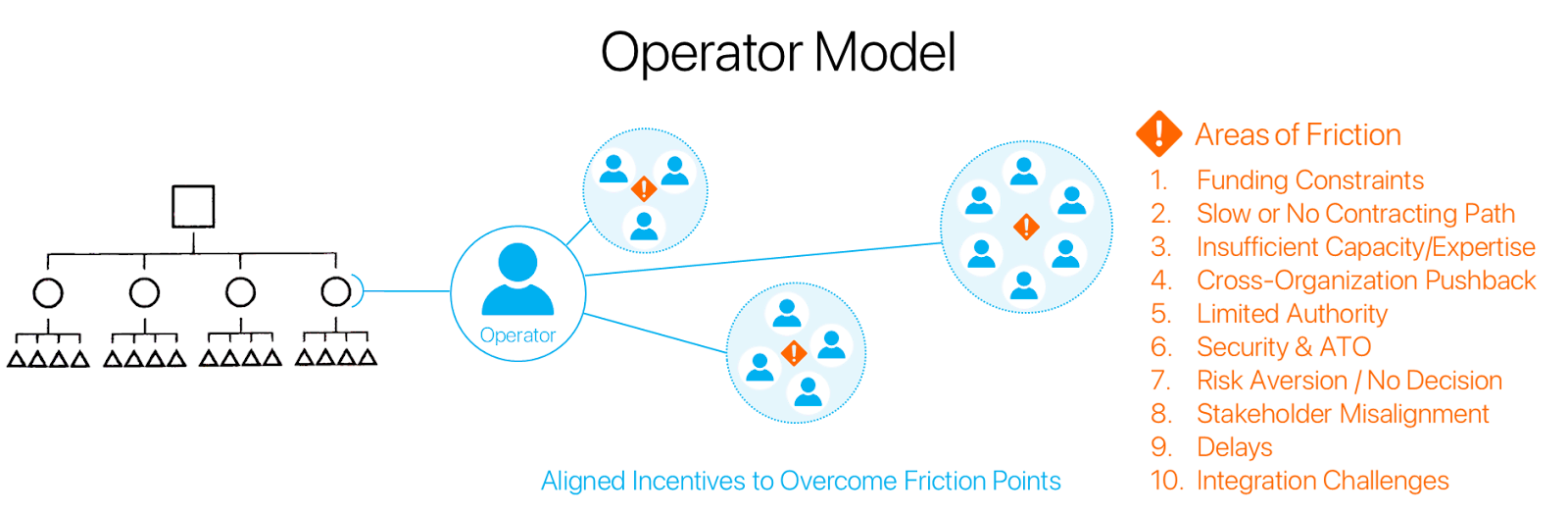
In each of the following cases, a single person, or “Operator,” was authorized to work outside the hierarchical construct to find ways to achieve the mission or vision by aligning incentives across organizational silos.
Florence Nightingale arrived at the Scutari hospital in 1854 to find a bureaucratic system paralyzed by red tape. The official purveyor withheld vital supplies, prioritizing paperwork over patients. Instead of challenging the system head-on, she built an informal coalition with The Times newspaper and its public relief fund to create a nimble logistics supply chain. This shifted the incentive structure from compliance to results and rendered the purveyor obsolete. Later, faced with infectious disease and no functioning laundry infrastructure, Nightingale employed soldiers' wives as laundresses, and used donor funds to rent a house and purchase equipment. The result was the first hospital-grade laundry facility at Scutari—and a significant drop in infection rates.
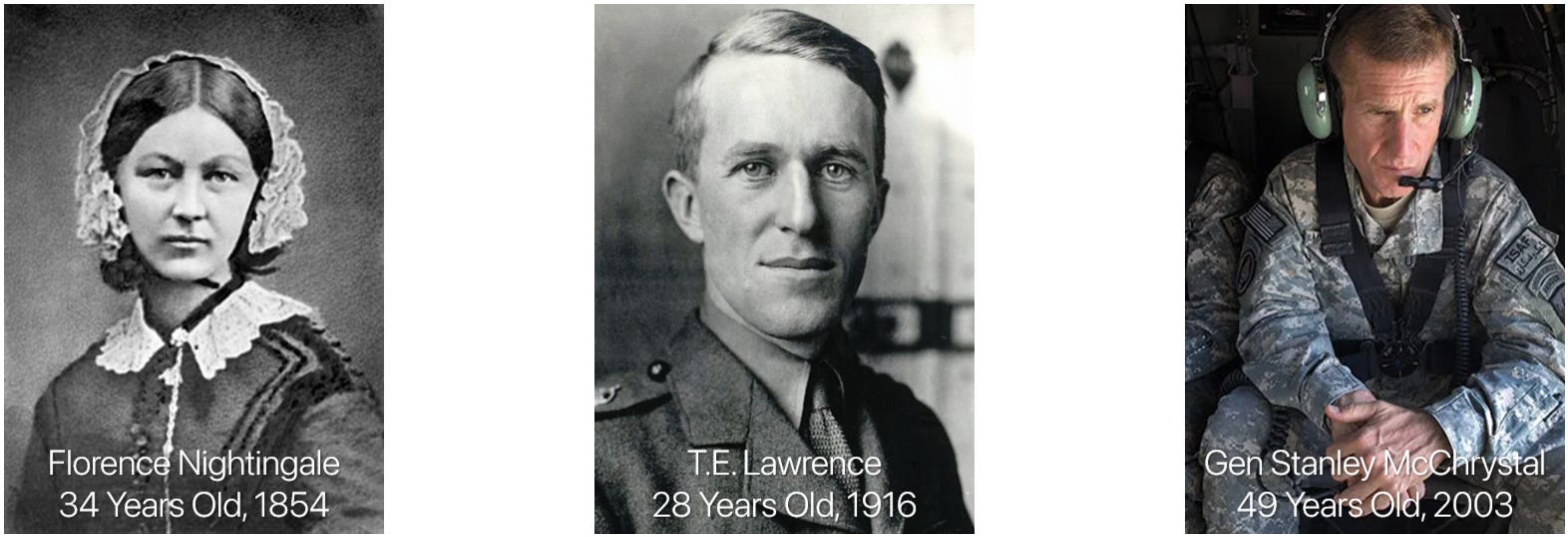
T.E. Lawrence, better known as Lawrence of Arabia, operated without formal authority but succeeded by aligning divergent interests through trust and narrative. In 1917, to capture the critical port of Aqaba, he unified tribal leader Auda abu Tayi—motivated by gold, honor, and command—with Emir Faisal’s political aspirations for Arab independence. Lawrence excluded French forces to avoid undermining Arab claims and framed the assault as a Bedouin victory, giving each stakeholder something they valued. The city fell from the unguarded desert side, validating his coalition-first approach.
General Stanley McChrystal applied the same principles during the Iraq War. Faced with a nimble insurgency, he saw that traditional command structures were too slow and siloed. His answer was a “Team of Teams” model that empowered small, autonomous units connected through real-time information sharing. Central to this were liaison officers—Operators in all but name—who served as connective tissue across the system. These liaisons weren’t just conduits for information, they were embedded connectors who built trust across organizational lines. By sharing real-time intelligence and collaborating on joint missions, they helped each agency see that cooperation wasn’t just a courtesy—it was a competitive advantage.
These historical figures weren’t just outliers. They represent a repeatable model of innovation inside complex systems. The Operator Model, inspired by their example, provides a practical framework for modern institutions.
Here’s how it works:
In practice, this looks less like command and more like collaboration. Operators don’t issue orders—they spark conversations. They don’t enforce compliance—they cultivate trust. They celebrate small wins, build momentum, and align teams around shared goals. Over time, they help fractured systems behave like unified networks.
The Operator Model works because it upholds human interaction, not charters and re-orgs. This is not a theory. It’s a tested approach to accelerating outcomes in the world’s most complex environments, where the same pattern holds: when someone is empowered to operate across boundaries, innovation follows. At BMNT, we’ve helped government agencies find success with this approach.
Base traffic should never be a Commander’s first priority. Yet, in summer 2023, traffic snaking its way onto San Diego’s Naval Air Station North Island (NASNI) reached a tipping point, with Sailors wasting 5,000 hours per month idling at the main gate. Rear Admiral Rosen, Commander of Navy Region Southwest (NRSW), was ready to try something new and needed a solution to expedite processing of high volumes of personnel and vehicles through the main gate.
Meanwhile, across the city, Naval Information Warfare Center (NIWC) Pacific received funding from a Marine Corps budget line to pilot access control solutions at Marine Corps Air Station Miramar. However, the initiative was misaligned with that location, which was not prepared to experiment with new technology at its base gates.
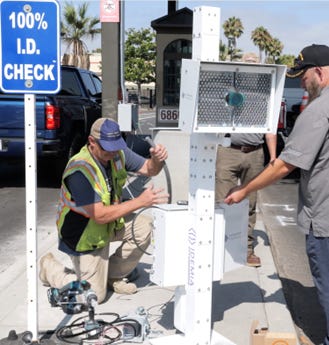
Jesse Marek, a BMNT innovation Operator serving as NavalX’s Innovation Operations Support Manager to NRSW, led conversations with NIWC PAC to help them realize that the Commander of NRSW not only had interest but was willing to support the installation of biometric technology at NASNI. She explained that it would help NIWC PAC execute their contract while providing legitimate risk reduction to better align with the Marine Corps’ risk posture. Aligning incentives resulted in a no-cost contract modification, which added NASNI as the first installation site. This effectively allowed NRSW to have biometric technology installed within the execution year, doubling throughput while reducing guard labor with a no-cost prototype. What began with less than $1M in operations and maintenance, and no contract when the Marek began her work, became a 650% return on investment for NavalX.
Nightingale, Lawrence, and McChrystal’s liaisons each had backing from the traditional command structure, but operated in unconventional ways outside that very same command structure. By aligning incentives across silos they each created a decentralized network of people, resources, and authority which enabled them to achieve results that the command structure alone could not.
By adopting the Operator Model, governments can move faster, work smarter, and deliver real results in an increasingly unpredictable world.
It’s time to bring this model in from the margins. We don’t need to dismantle the existing system. We need to insert single individuals who can align incentives and create a decentralized network of untapped potential.
In short: we need Operators.