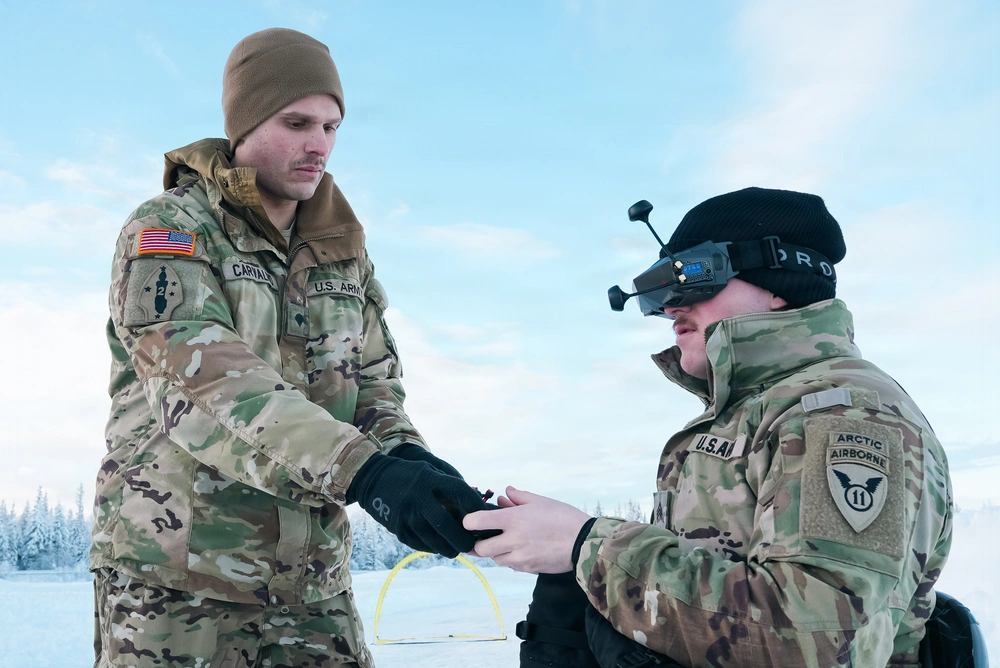
Winning the drone war requires more than faster acquisition. DoW must learn, adapt and field solutions faster
Editor’s Note: A version of this story previously ran on National Interest.
Secretary of Defense Pete Hegseth’s decision to stand up Autonomous Warfare Command (AUTOWARCOM) is the right one. The war in Ukraine has made it clear that autonomy is no longer a niche capability; it is changing how every service fights. A functional command, built on the model of Special Operations Command or Space Command, can set joint priorities and integrate forces at a scale no single service will on its own.
But a four-star headquarters will not, by itself, make anyone faster. Speed comes from how quickly an organization learns which problem to solve next.
The phrase in Hegseth’s announcement worth underlining is that the command will “define joint needs.” Where those needs originate will determine whether the command succeeds. If they come from headquarters staff, the military risks buying the wrong drones faster. If, on the other hand, they come from operators watching the enemy adapt week to week, the command will work. Everything else—authorities, budgets and org charts—should follow from that basic principle.
The United States already has the technology it needs to defeat enemy drones. Kinetic interceptors, directed energy weapons, and electronic warfare are all proven methods. The problem is that adversarial drone powers can adapt faster than we do; they can change radios, autopilots and tactics in days, while the US military often takes months to respond. By the time a requirement clears the necessary bureaucratic steps, the problem it was designed to solve is no longer relevant.
This is not a technology problem, but a cycle-time one. Two numbers will tell us whether AUTOWARCOM is working: the days from when a problem is spotted in the field to when a fix is in a unit’s hands, and the days it takes for a lesson learned by one unit to reach every other unit facing the same threat.
Project Agincourt, the ongoing one-year effort to prepare the way for the Autonomous Warfare Command, matters more than the four-star headquarters. Decisions made during this year will determine how the command operates for years to come. Pairing DIU Director Owen West with Navy SEAL Senior Chief Max Strasiser—a strategist and an operator—is the right instinct. The harder task is ensuring the organization they build works the same way.
The establishment of a new combatant command requires congressional action, which is why the target date of October 1, 2027, ultimately depends on lawmakers. I do not see Congress as the obstacle. The Senate’s version of this year’s defense bill already proposes a similar command. The real debate is how much freedom the command gets to spend money and buy things.
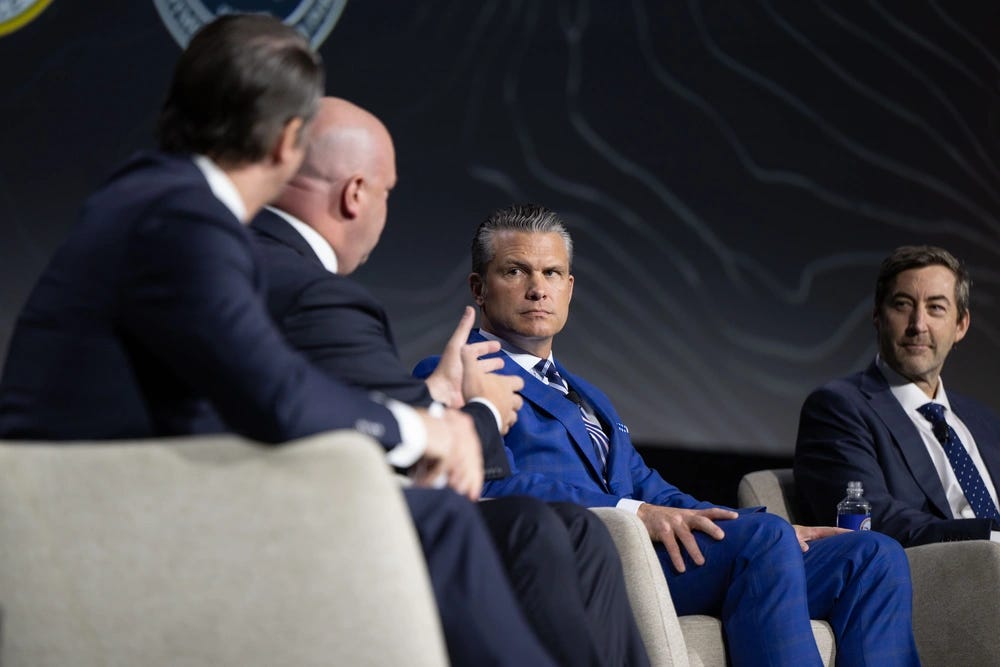
AUTOWARCOM needs authority modeled on Special Operations Command: its own money and its own ability to buy, paired with rigorous reporting to Congress. A command that has to ask the services for everything will move at the speed of the slowest service. There is precedent for overcoming institutional resistance. Congress pushed back on Goldwater-Nichols, the Special Operations Command, and the Space Force, and all three happened.
The fastest way to win that argument is with evidence framed the right way. As director of the Rapid Equipping Force, I was once called to a congressional office to justify our “green energy” work in Afghanistan. The assumption was that the mission was about cheaper fuel, or environmental sustainability. I explained that it was really about fewer resupply convoys on roads full of IEDs, and fewer soldiers killed driving them. A month later, the defense bill carried a $20 million line for the work.
Project Agincourt should spend its year building that kind of case: problems stated in terms of lives and missions, and fixes measured in days.
Much of the conversation around autonomous warfare so far has focused on the size of the budget. The Pentagon asked for $54.6 billion for its Defense Autonomous Warfare Group in Fiscal Year 2027, most of it through a reconciliation bill that has not passed. The committees so far have written down about $1 billion.
Those figures matter, but the structure of the funding may matter more. Systems that change every month cannot be bought with budget lines locked in two years ahead. A faster learning cycle requires a funding model that can keep up with it. Three steps should come first:
Tradeoffs will come. The principle for making them is simple: every dollar spent on a system that a cheap drone can take out deserves a hard second look.
Over Agincourt’s year, four signals will show whether the command is being built to learn or just to buy:
The Department has spent two years reforming how it buys. Autonomous Warfare Command is a chance to reform how it learns: what to buy, whether it worked, and who else needs it.
The side that wins the drone fight will not be the side with the most drones or the biggest headquarters. It will be the side whose loop turns fastest. Agincourt has a year to build ours. Congress should give it the authority to try, and hold it to the clock.